8min Readtime
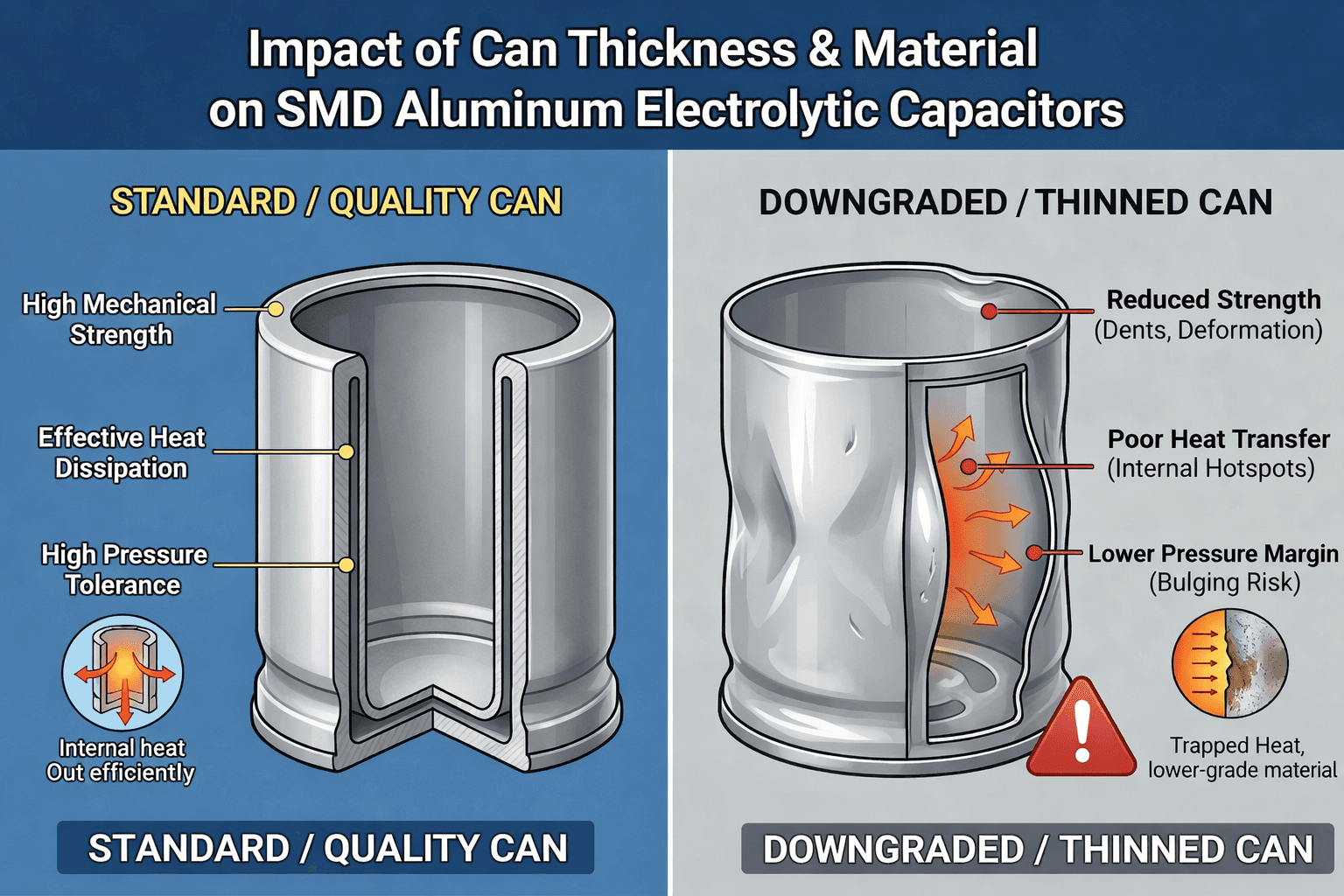
In SMD aluminum electrolytic capacitors, the can is not only packaging—it directly affects mechanical strength, heat dissipation, and safety margin. In today’s market, the can is also sometimes used as a lever for structure-driven cost reduction.
1️⃣ Reduced can thickness / weight Thinning the can or reducing its weight can lower cost quickly, but it also weakens mechanical strength. During placement, depaneling, or shipping, the can becomes more prone to dents and deformation, which may reduce seal reliability.
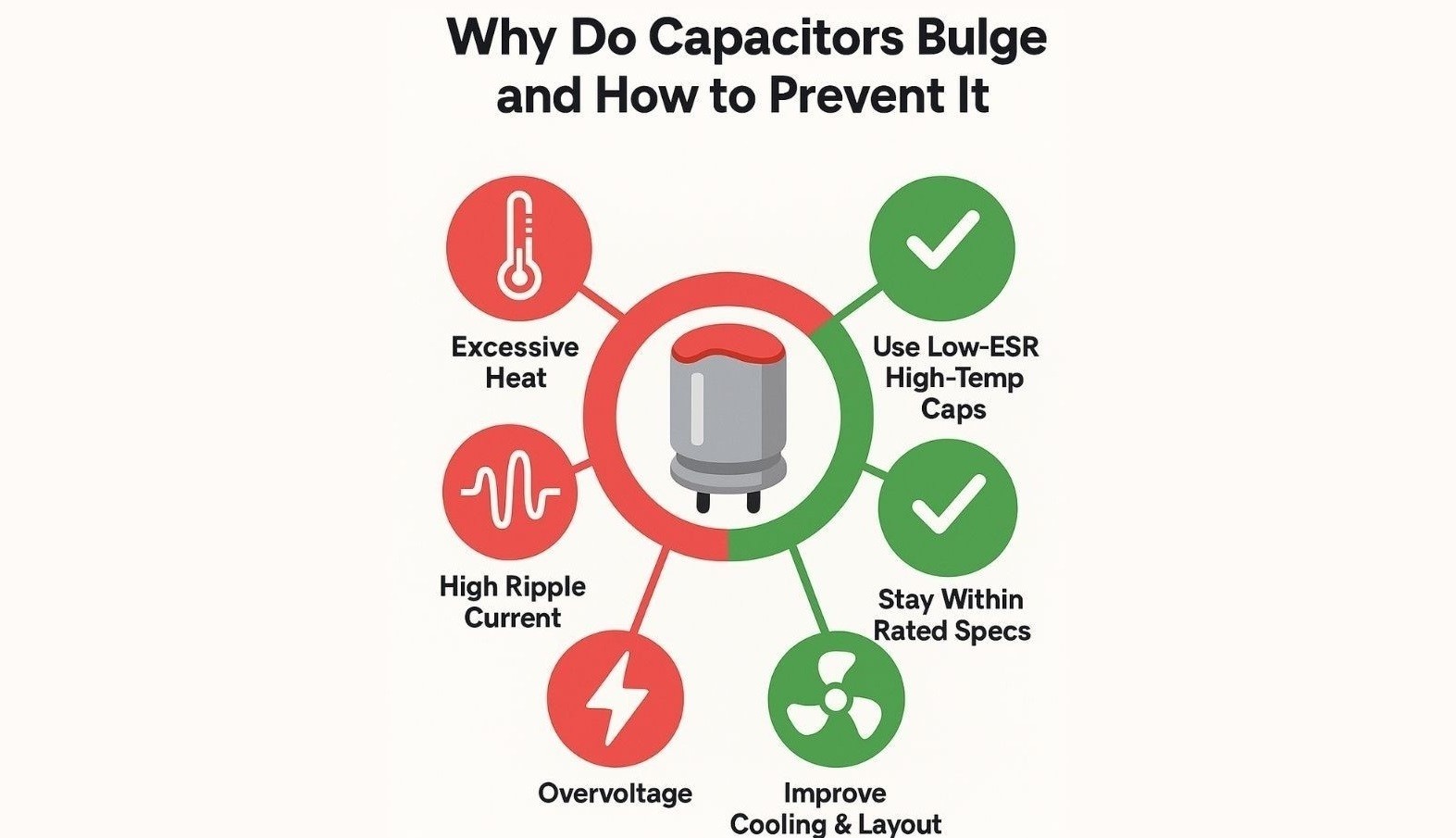
2️⃣ Lower internal-pressure tolerance An overly thin can is less capable of handling internal pressure changes. Under high temperature, high ripple current, or abnormal operating conditions, bulging—or even failure—risk increases and the safety margin narrows.
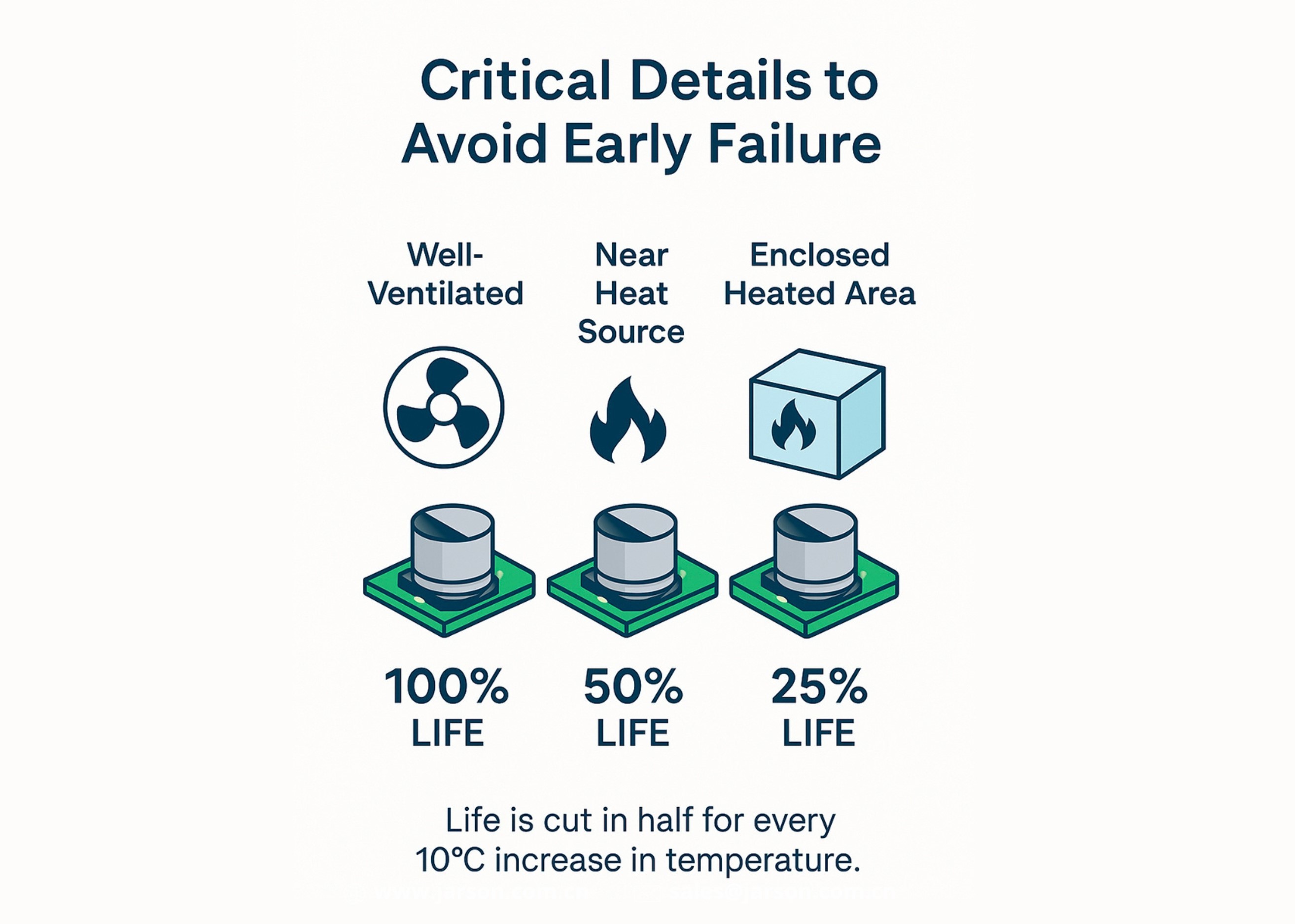
3️⃣ Worse thermal performance The can is an important heat-dissipation path. When thickness and weight are reduced, heat transfer efficiency drops, internal temperature rise increases, electrolyte aging accelerates, and lifetime can be shortened.
4️⃣ Potential risks of lower-cost materials Compared with materials designed for capacitor cans, low-cost cold-rolled steel is typically harder to control in terms of ductility, corrosion resistance, and consistency. Over long-term use, issues such as corrosion and stress concentration become more likely, amplifying reliability risks. Conclusion “Lightweighting” or “downgrading” the can may look like a small change—“just a bit thinner or lighter”—but it can directly impact strength, thermal performance, and safety margin.
More Tech